Understand the game.
Give your agent the project itself: its source, content, assets, and editing controls. It can inspect what is there before deciding what to change.
 Dashpop
Build games with the agent or harness you already use. MCP connects it to the Dashpop Game Engine, with the tools to shape a world, create its editor, and play what it builds.
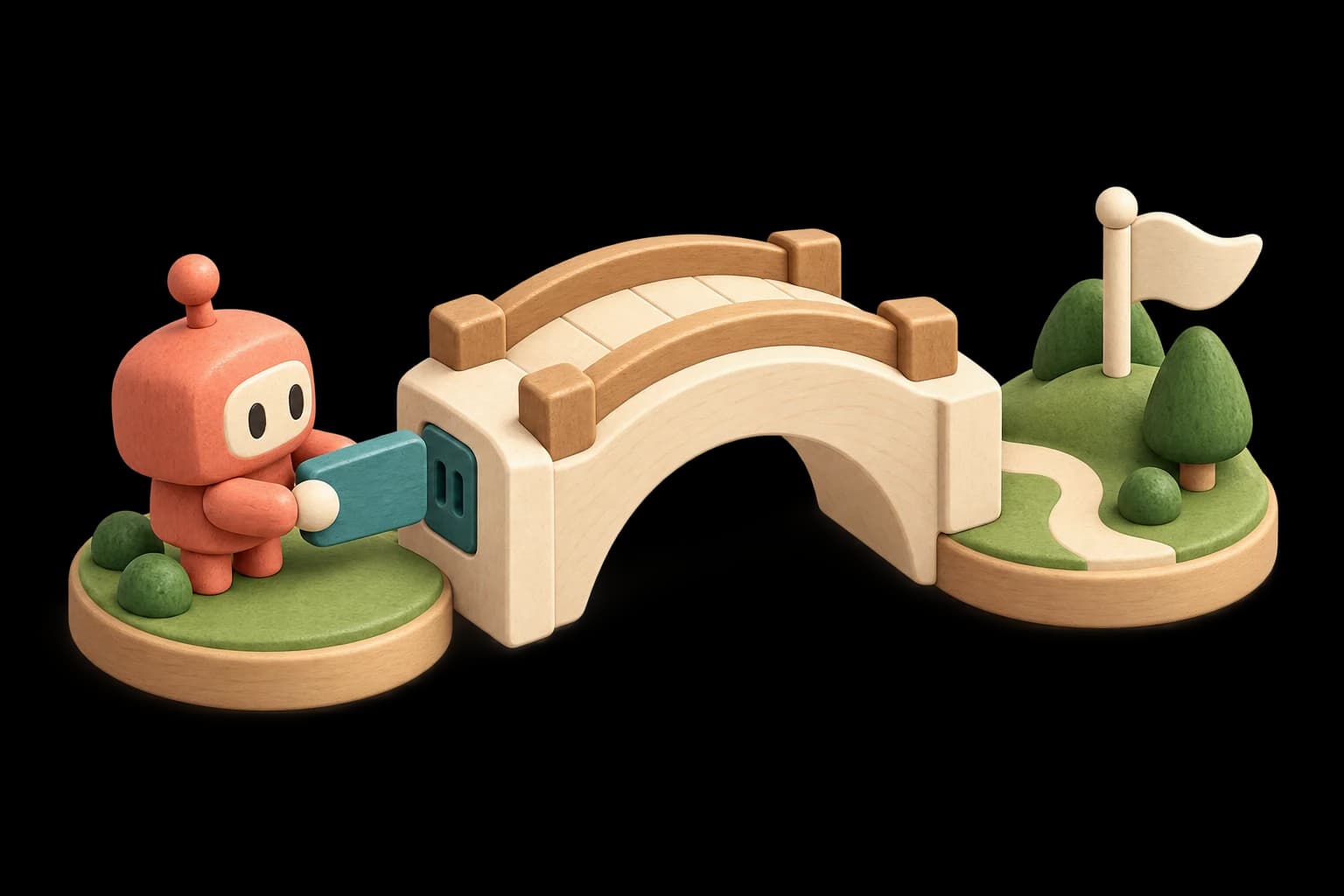
Agent-native means the engine is built for the whole creative loop. Your agent can understand, change, and experience the same game you do.
Give your agent the project itself: its source, content, assets, and editing controls. It can inspect what is there before deciding what to change.
Ask for an island brush, a jump control, or a dialogue editor. Your agent can create the tools that make your game easier to shape by hand.
Run the game, try an input, inspect a frame, and read the result. Your agent gets feedback it can use to refine the next version.
Make a change in the Editor, then ask your agent to keep going. Both work with the same project, so your choices become part of the next conversation.
Describe a game in your agent. Play it in Dashpop. Shape a few details yourself, then ask for the next change.
Your agent keeps its own model, context, and tools. Dashpop gives it a game engine and a shared place to create.
See the creative loop“Make a snowy valley where a little fox lights the lanterns before nightfall.”
Move the cottage. Add a pond. Find the evening light you like.
“Keep the world I shaped. Add a bridge to a new island, with one more lantern to find.”
MCP gives agents a common way to discover and use tools. Connect through an MCP-compatible client, or build Dashpop into your own harness.
Connect a projectOpen a project in the Dashpop Editor. Choose Connect agent to find its connection settings.
Copy the project’s MCP configuration into your client’s MCP server settings, then enable the connection. For a hosted game, sign in to Dashpop when prompted and approve access to that game.
Ask your agent to inspect the game and discover its tools. Then describe your idea, play the result, and keep shaping it together.
The Dashpop plugin brings the same game tools into your agent, along with a workflow for creating and reviewing games. Direct MCP connections give your own harness access to the same engine.
Use an agent or harness with an MCP client that can discover and call tools. Add the connection configuration for your Dashpop project to that client. You choose the agent, model, and workflow.
You can connect directly through MCP. The plugin packages the connection and game creation guidance together for clients that support plugins.
Yes. Play, Editor, Assets, Code, and Tools stay together in the Dashpop workspace. You can use the game’s creative controls, inspect the source, and ask your agent to continue from the changes you made.
The connection belongs to the project you select. Your agent can discover the tools available to that project and use its granted access to inspect, edit, build, and playtest.